Why Staying Informed Matters
The immigration process is full of moving parts, and one of the hardest parts is simply knowing what changed when. New policies, processing-time updates, form changes, and the status of your own case can all shift without obvious warning. Staying informed is not optional — it can be the difference between acting in time and missing a deadline.
This article explains the official ways USCIS shares information, what to watch for, and how automated alerts can do the monitoring for you.
The Official USCIS Channels
USCIS does not operate a single guaranteed notification system for every case, but it publishes information through several official channels. The agency's website is the hub, hosting news releases, policy guidance, and form information. A social media directory lists its verified accounts. And the case-status tool is where you look up your own receipt number.
For agency-wide announcements, the USCIS newsroom is the authoritative place to check. The website also maintains a page explaining how to check your case status online.
How Case Status Alerts Work
The key limitation is that USCIS case-status updates do not reliably generate a push notification. When your case moves to a new status, the online record updates — but there is no guarantee of an email or text telling you it happened. These are the updates we call silent updates.
That is why the idea of "alerts" exists separately from the portal itself: to close the gap between a status changing and the applicant learning about it. Automated services poll the official tool and notify you when something changes.
What Is Meant by a Telegram-Style Alert
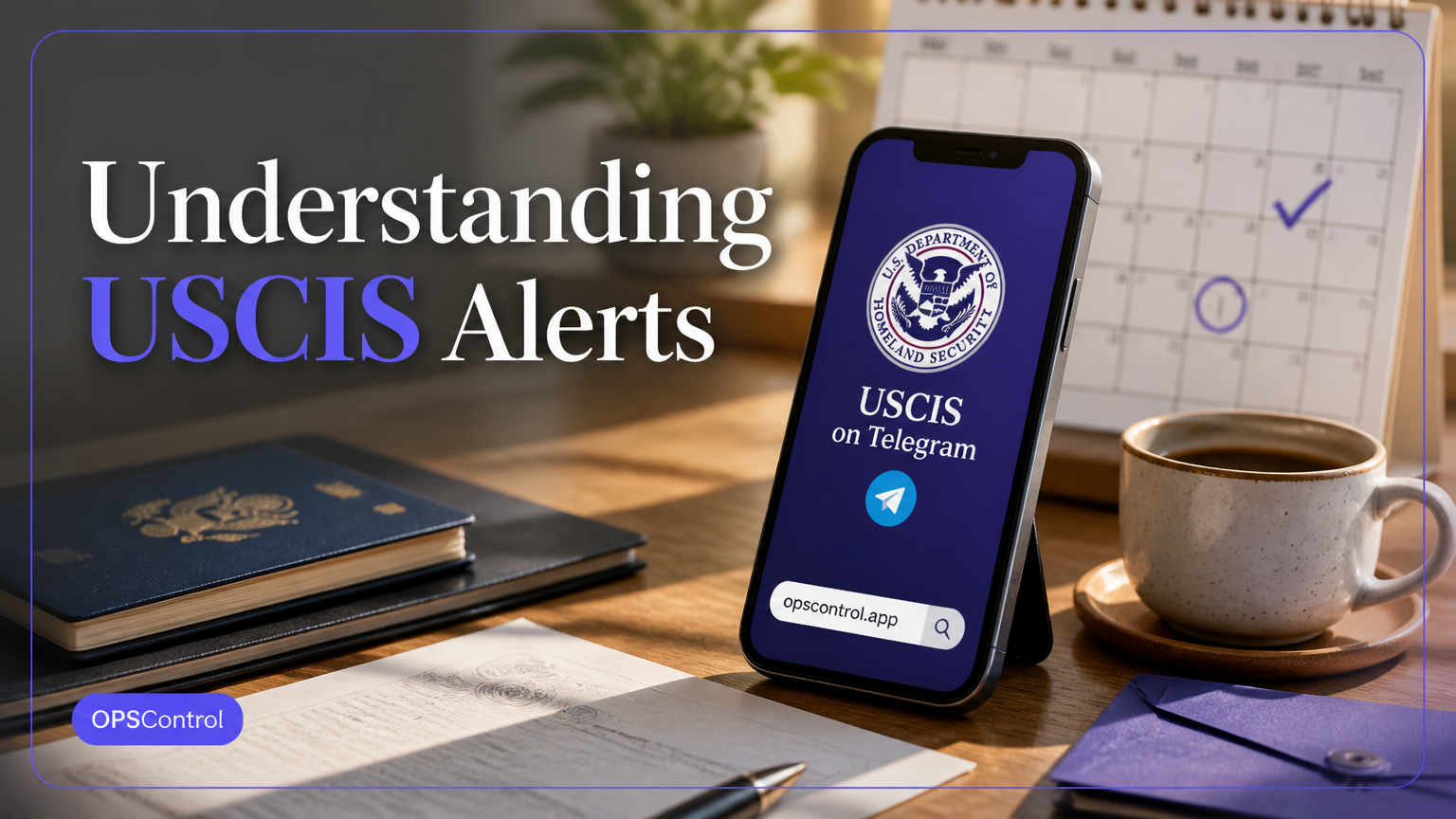
The word "telegram" here means a short, direct message delivered to you — the way a wire message arrives instantly rather than via a weekly mail bundle. In modern terms this maps to a push notification, an SMS, or an instant-message-style notification sent the moment a condition is met.
A telegram-style alert for immigration is therefore a concise notification you receive in near-real time when your case status changes, so you are never left guessing whether something moved.
The Problem With Manual Checking
The practical problem with manual checking is twofold. First, updates arrive at unpredictable intervals, so no fixed check schedule is reliable. Second, silent updates send no notification at all, so the only way to catch them is to look. The result is that diligent applicants still miss important changes because there was no signal to prompt them to look at the right moment.
This is not a user failure — it is a design gap in how case updates are delivered. Automated monitoring exists specifically to fill that gap.
How OPSControl Sends You Alerts
OPSControl closes the loop by checking the official USCIS status pages continuously, around the clock, until your case reaches a completed status. When your case status changes — including silent updates — you receive a direct notification right away, and the change is recorded in your timeline.
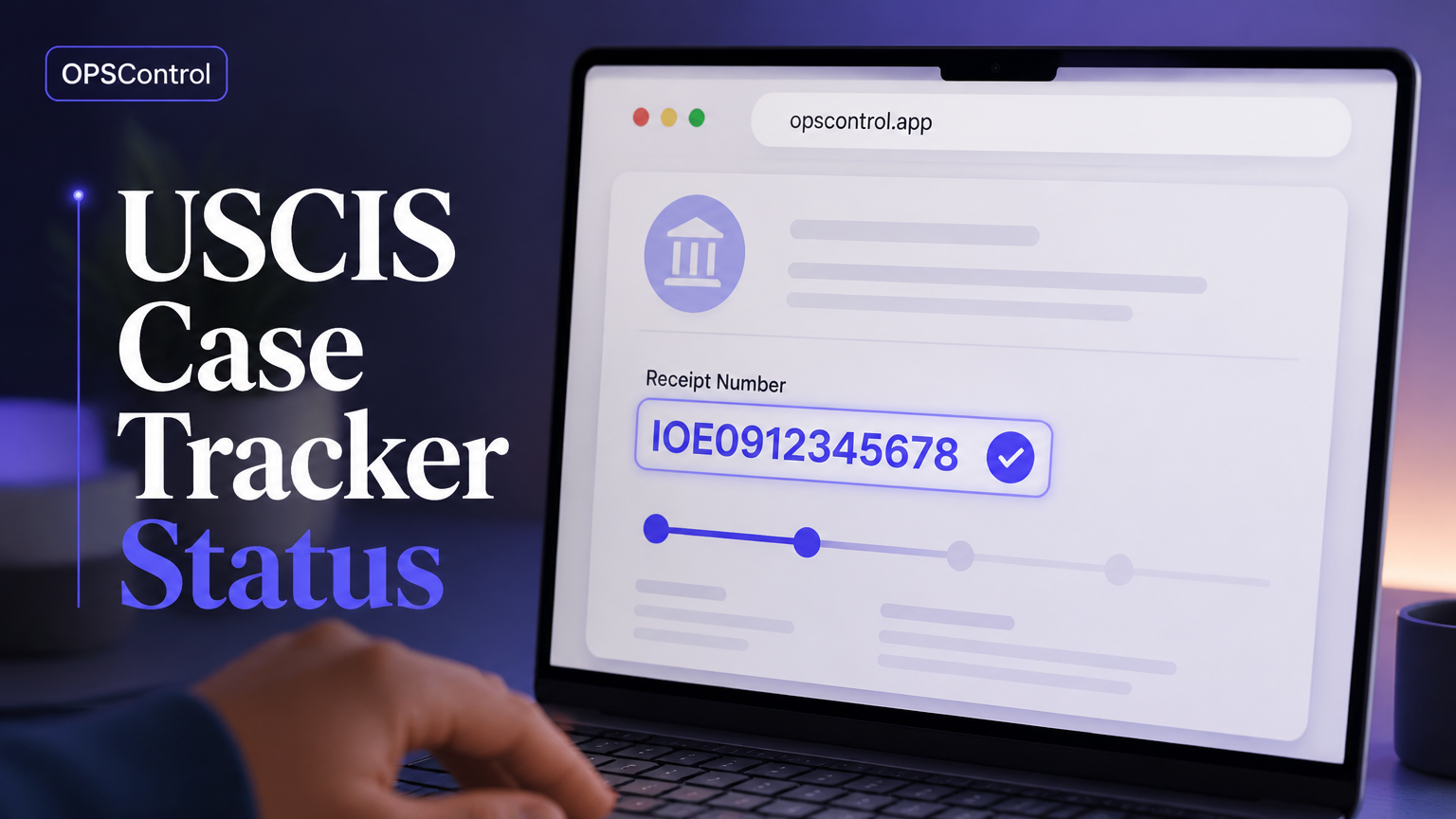
This is the telegram-style alerting model applied to immigration: short, timely, and tied to the official source. You add your receipt number once and receive updates without needing to check the portal yourself.
Which Petitions Are Supported
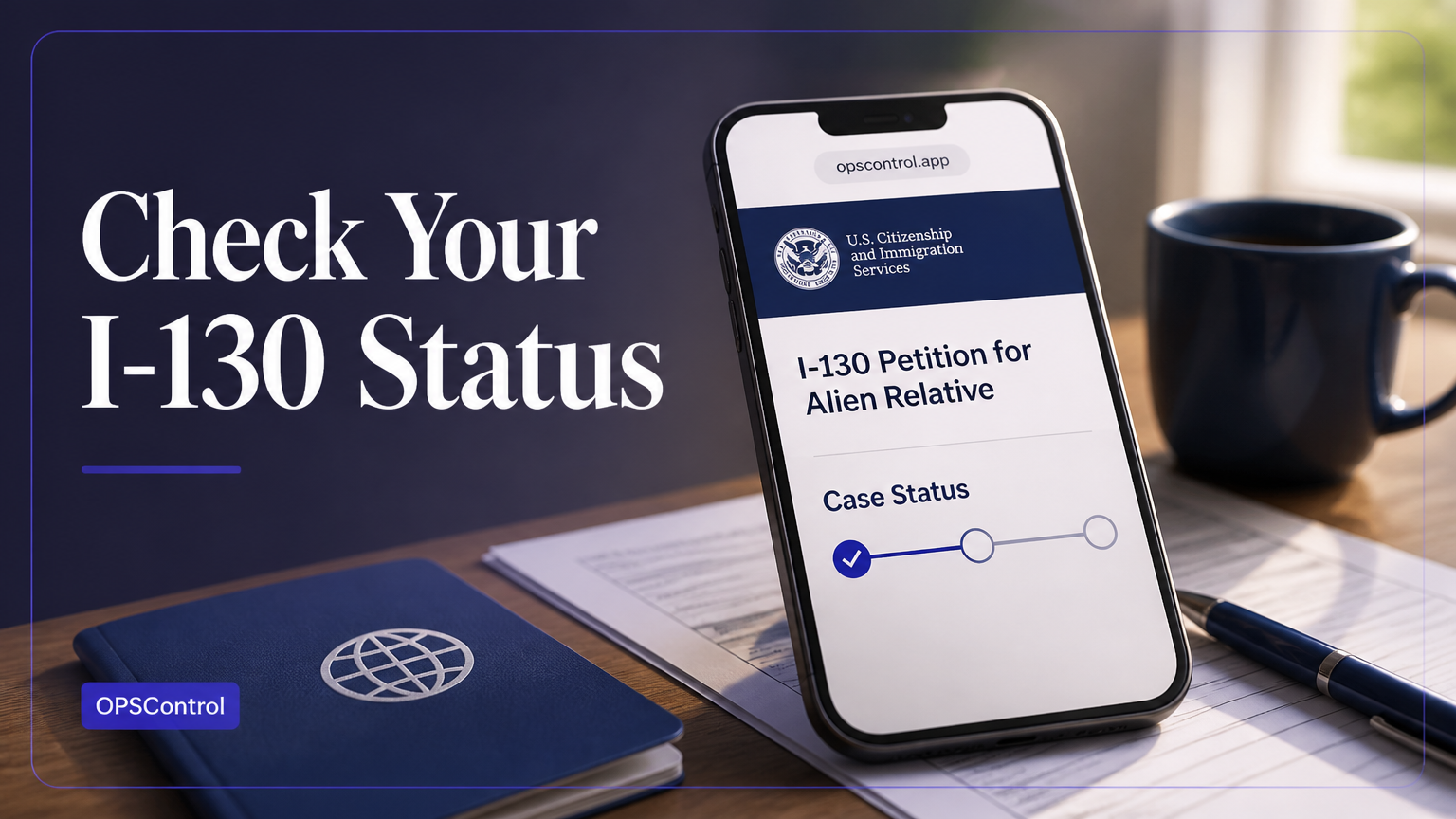
The monitoring works across the major petition and application types: I-140, I-485, I-765, I-130, I-751, and N-400, among others. Because the service reads the same official status pages, it covers the same petitions the public tool does.
If you have several family members or multiple filings, each case can be added, and you receive separate, clearly labeled alerts for each one.
Privacy and Reliability Considerations
When you give a tracking service your receipt number, it is worth understanding exactly what it does with that information. A reputable service uses it only to query the public status page and does not share it. The alerts reflect what the official portal says; they are not official USCIS communications.
It is also worth remembering that automated alerts are conveniences, not legal documents. Always treat the official USCIS notice as the source of truth for any decision that affects your case.
Frequently Asked Questions
Here are the most common questions about USCIS alerts and staying updated on your case.